
By now, you’re seeing that there’s value in looking at our underlying beliefs as some beliefs lead to poor life results and some beliefs lead to better life results. If you accepted the challenge of the last article, you’re beginning to see the benefit of adopting a specific belief which is: you are not necessarily the same or the equivalent as your thinking.
So, hopefully by now, you are realizing the power of our thinking and beliefs. And if you accepted the last challenge, then you are realizing that what you think about yourself in the deepest recesses of your being actually can directly impacts how you live your life.
In each article, I contrast what I call a Thriving Life Belief (a belief that brings thriving into life), or TLB, with a Languishing Life Lie, or LLL (a belief that leads to languishing in life –> the opposite of thriving). Here’s today’s set of contrasting beliefs to consider:
TLB #4: Human beings have value. Therefore, you have value, whether you believe it or not. Our value is not based on what we think, do, and say.
LLL #4: Human beings have no intrinsic value or their value is based upon what they think, do, and say.
While I’ve implied human beings have value based upon previous articles, the question for today is: how do you know that human beings have value and what basis do you make that claim?
There are two main lines of argument I want to employ here to “prove” the value of human beings.
The Argument from Experience
In working with people over the years, I have observed that even when people struggle with valuing themselves (which was a focus I addressed in the last article), they often seem to intuitively know that people around them are valuable.
Interestingly, in my outside work as a psychiatrist, I’ve used this as a tool to help young people who are struggling with self-worth. More often than not, there is some pretty harsh self-judgment involved; perhaps they are disappointed in their behavior, their looks / body image, or a lack of approval/validation from others around them. If I discern that it’s the right time, I present them with a thought experiment. I ask them to exercise their imagination and picture themselves having a child in the future.
I then ask them how they would feel and respond if their child came to them and deemed their life worthless on the basis of their own behavior, thinking, or lack of affirmation from others. I inquire, “Would you agree with your child that he or she is worthless? Would you determine in your heart at that moment that your child has lost his or her value?”
Almost invariably the young person I’m talking to responds confidently that they would never consider acting this way with their child! They would, after all, want to ensure that their child knows they are loved and valuable no matter what!
At this point, I like to turn the tables and ask this question: “If you so confidently know that your imaginary future child has value despite how he or she feels, how they behave, and how others view them…then doesn’t that imply that you have the capacity to love and value people, including yourself?”
More often than not, this questions stops them in their tracks and I see the proverbial wheels turning. Most of them admit they had not thought of it this way before. And even though I’ve done this dozens of times, I still find it quite fascinating!
Now I know that in and of itself the observation that people intuitively value other human beings doesn’t necessarily prove that humans have value..but doesn’t it make you wonder? Are we innately wired to value human beings? Why would we value human beings if human beings have no instrinsic value? Could it be that our instinctual tendency to value people hints at a deeper truth? Could that deeper truth be that we all actually DO have value?
The Argument from Revelation
I believe there is a lot we as humans can learn from the Bible which I view as the inspired and authoritative Word of God. If you’re not a religious or spiritual person, bear with me for a moment as we take a look at an interesting verse:
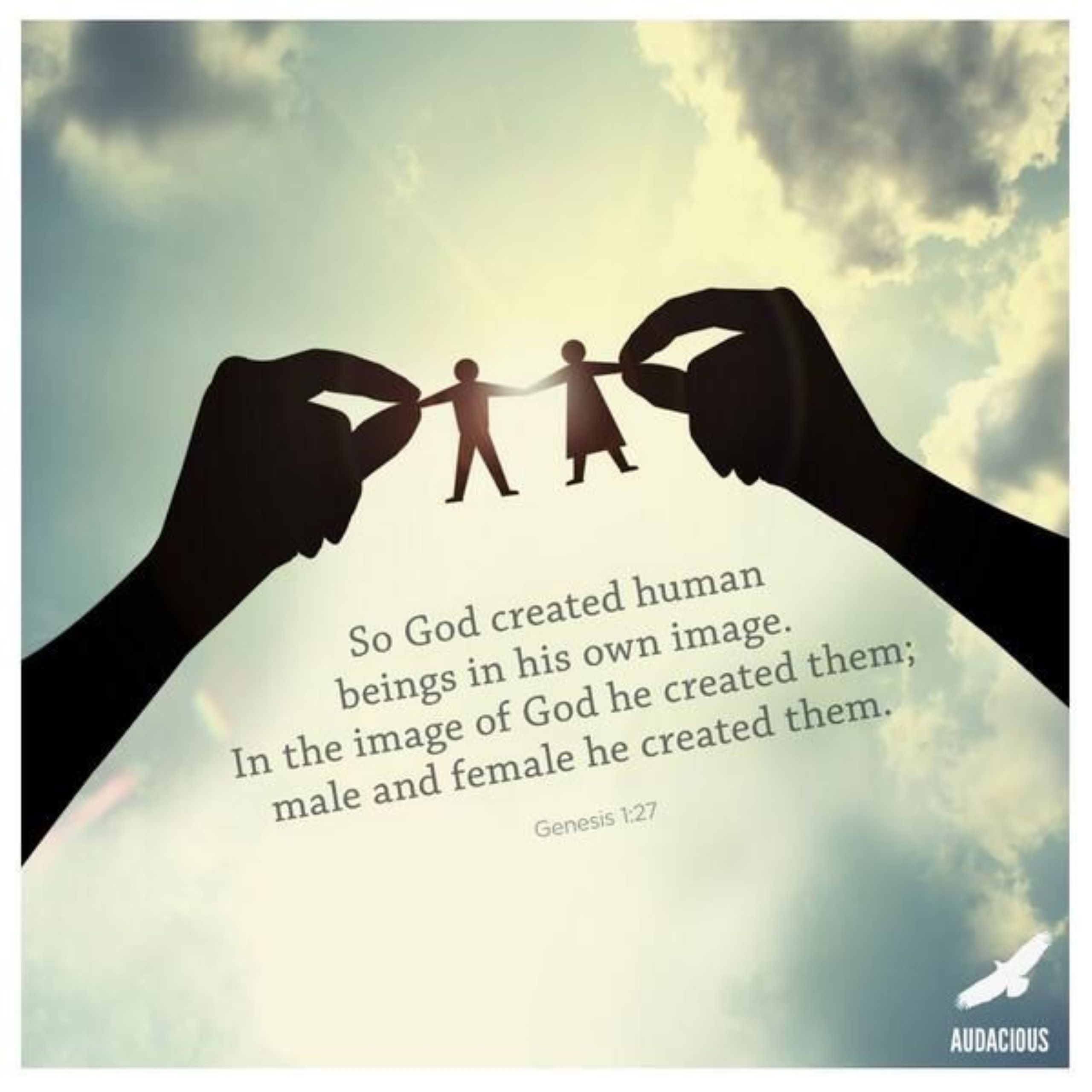
“So God created man in His own image, in the image of God He created him; male and female He created them.” (Genesis 1:27)
In this context “man” can and most likely does refer to mankind or human beings in general. While I’ve heard different interpretations as to what it means to be made in the image of God, I think it’s evident that the author is informing the reader that we as human beings have a special status among all of God’s creation. And if God is the most powerful, omnipotent, omniscient, loving being in the universe, then could it stand to reason that we have value? Could it be that He is the Value-giver?
Now for the astute reader and observer, I fully understand that neither of these arguments gives a definitive proof per se that human beings have value. It’s hard to argue against the idea that they at least suggest we have may value, isn’t it?
And what if proving the existence of value entails a fundamentally different process than proving the existence of something like a new species of animals or subatomic particles? In other words, what if the rules we use for proof in the material world are different than the rules we use for proof in the spiritual world?
On one hand, we are accustomed to the law of the scientific method to examine things that we can see so that we can believe certain realities about those things that we can see. In other words, “we believe because we can see.”
But what if – when it comes to the spiritual / metaphysical world, we operate by a different law? Could it be that we make the choice to believe things and act on those beliefs thereby opening up a new reality? In other words, “we see because we can believe.” Another word for this is “faith.” Hmm…
Question:
This idea of human beings having value may seem really obvious to you, but have you ever thought before about why they have value? Or where their value comes from?
Application Challenge:
1. Write a bit about times you have struggled with your own self-value/self-worth. Ask yourself: why have you struggled with believing you or your life had value?
2. Now think about someone you have cared for or care for. Think about their worth and value as a person. Where do you think it comes from and how do you know?
3. Now ask yourself this. Does the answer to #2 help you address your own struggles in #1? Why or why not?
If this is challenging or you’d like to learn more about this, reach out to me and set up a discovery call. Let’s see what we can discover that will help you get unstuck and move forward so you can move towards thriving in your life!
